Bilingual Real Estate Platform
A real estate marketplace in Arabic and English where a listing goes all the way to a signed contract and recorded payments.
Role
Lead frontend developer

3
weeks to build the full frontend
4
roles in one codebase
Before and after
Before
Most property sites stop at "contact the agent". This platform needed owners to publish listings, staff to review them, buyers and tenants to make offers, and both sides to sign and pay in the same system, Arabic first with full English.
After
One web app with four experiences: a public site plus dashboards for owners, employees and admins. A listing moves through review, publishing, inquiries, viewings and offers; an accepted offer becomes a contract both sides sign online, with payments and PDF receipts recorded against it.
Key features
Search and filter listings by purpose, location, type, price and bedrooms, then open a full property page with gallery, specs, amenities and map.
List a property with a guided form: prices for sale or rent, specs, amenities, photos and a pinned map location, in both languages.
Send inquiries, book viewings and make offers; owners and staff answer from their dashboards.
Sign contracts online: the status updates as each side signs and turns active when both have signed.
Track payments per contract and download a receipt as PDF.
Admins review listings before they go live and follow everything through reports and activity logs.


See it in action
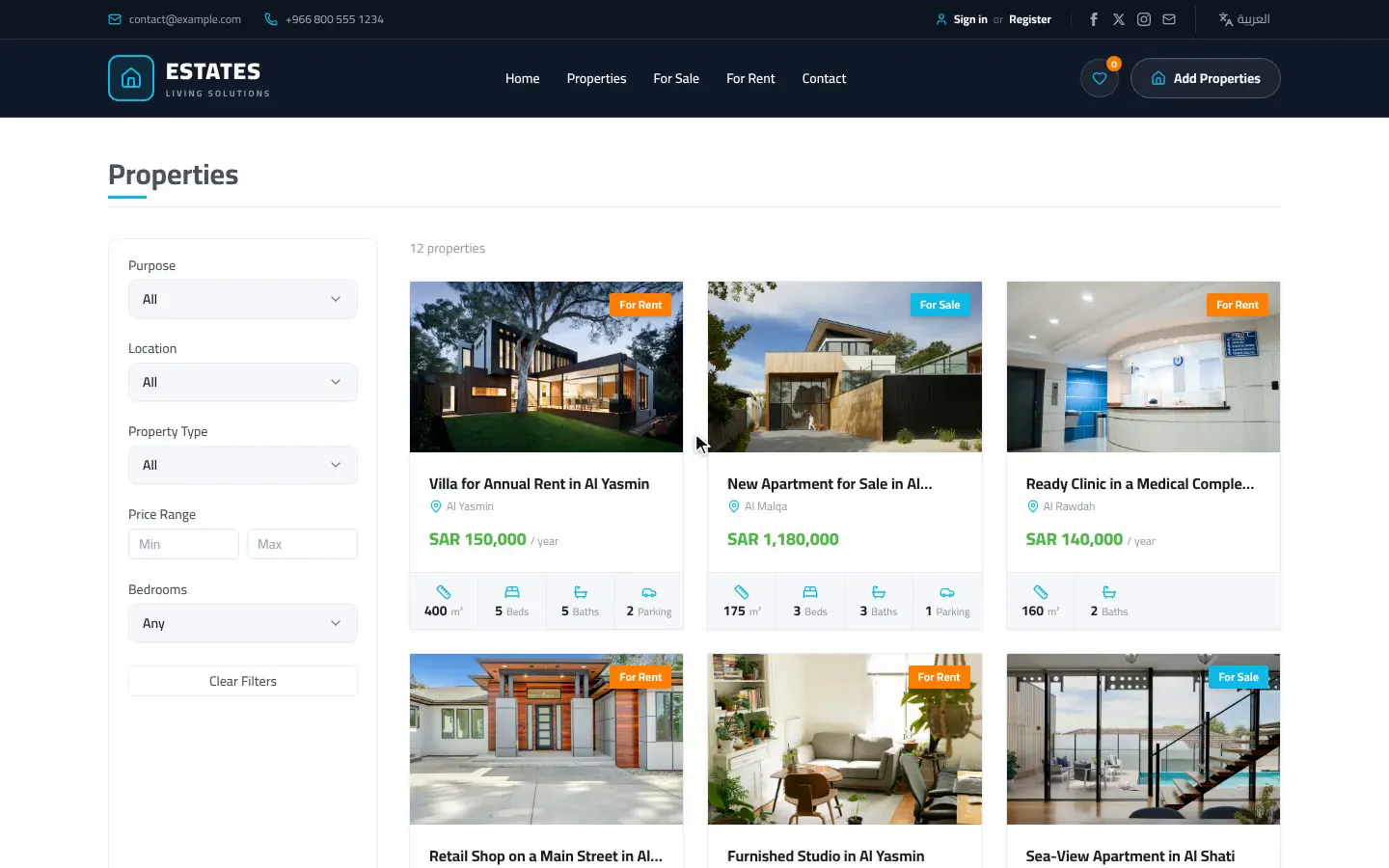
01Search, filter and open a property
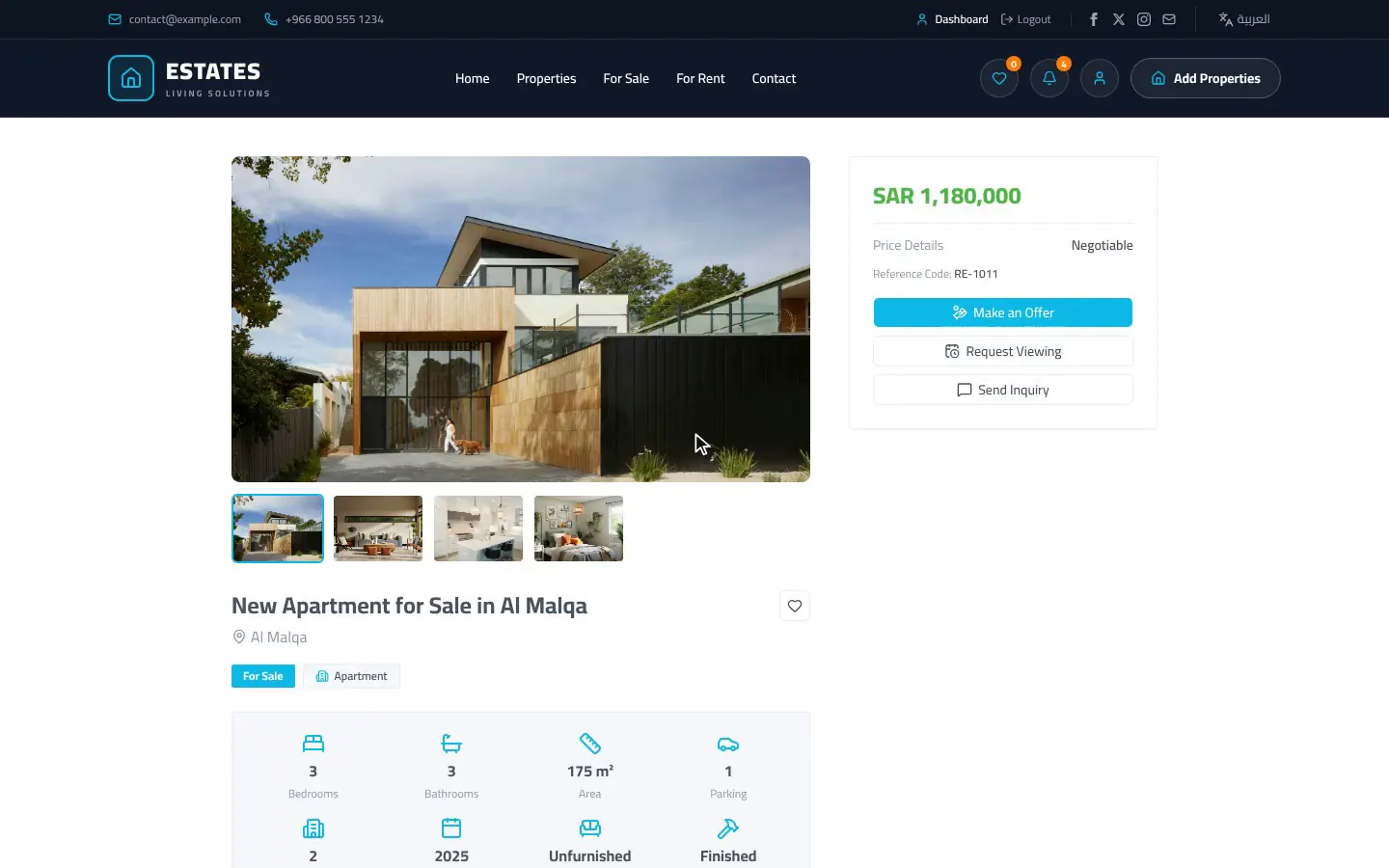
02Make an offer and see it in the dashboard
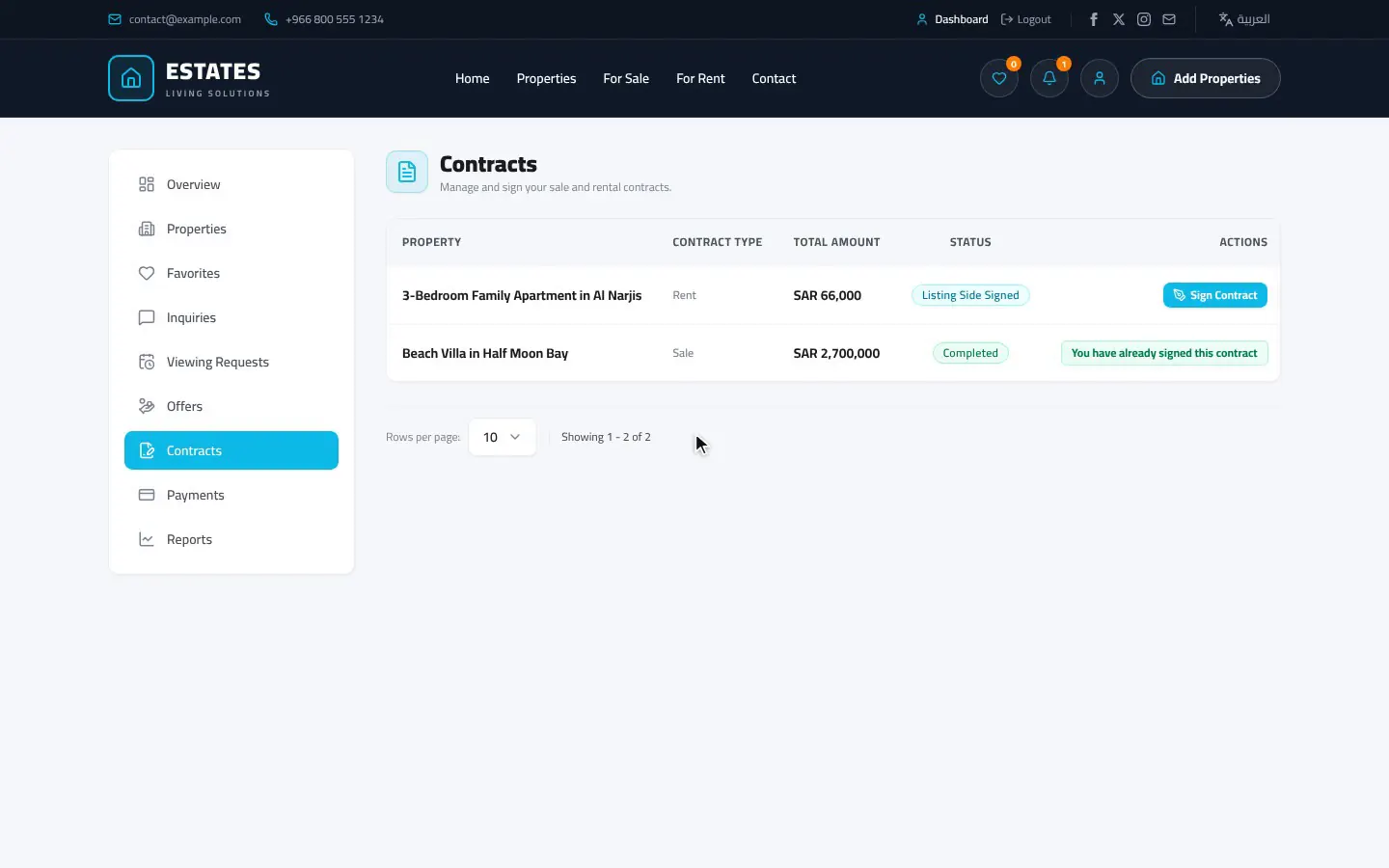
03Sign a contract and watch it go active
Screens
Desktop
01/ 09
Home: featured property and quick search
Mobile
Listings on mobile
02 / 04
My role
Lead frontend developer
Frontend, built solo: every screen, routing, roles, both languages, state management and the full integration with the API. The backend (Laravel) was built by a separate developer, and I worked against his API contract.
Status
Delivered.
Under the hood
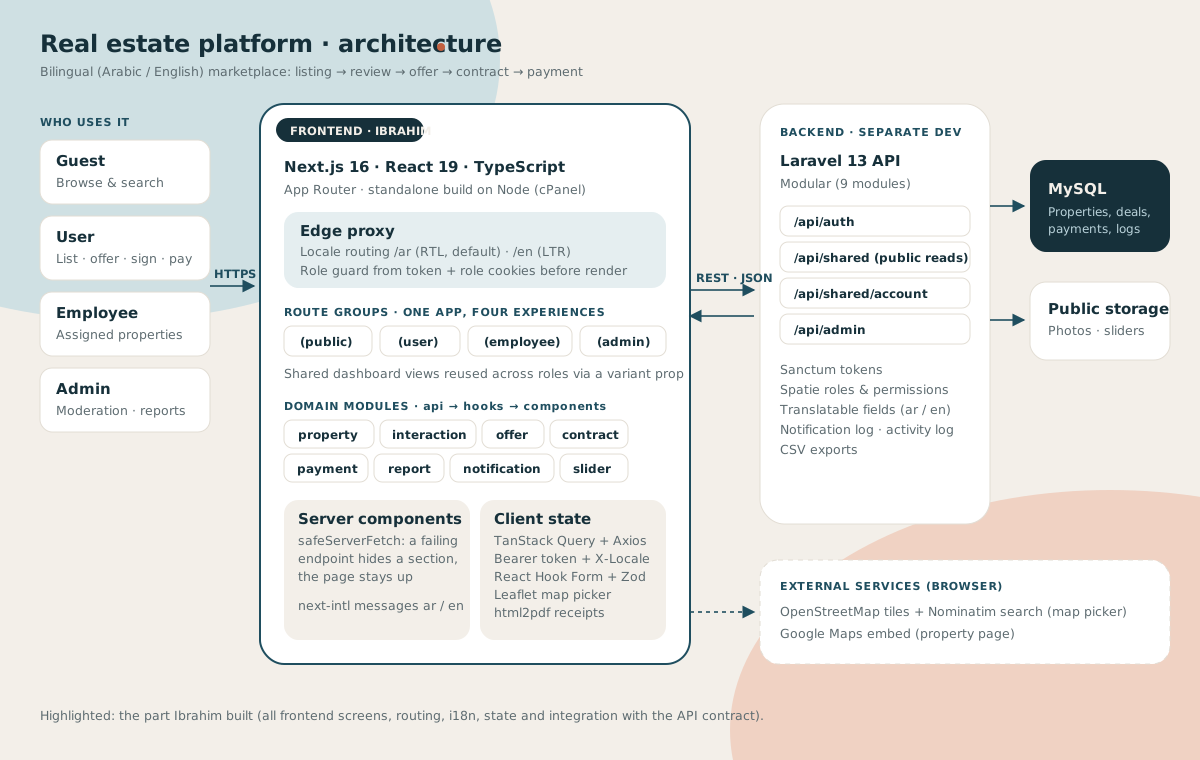
Next.js 16 (App Router), React 19 and TypeScript, Tailwind CSS with shadcn/ui, TanStack Query, React Hook Form with Zod, and next-intl. The code is organised by domain module (api → hooks → components), mirroring the backend modules one to one. In numbers: 49 pages per language across 4 role areas (public, user, employee, admin); 521 translation keys per language, Arabic (RTL) as the default and English (LTR); 9 backend modules integrated (properties, interactions, offers, contracts, payments, reports, notifications, sliders and auth).
- Access is decided before render. An edge proxy reads the token and role cookies and redirects at the edge, so a user never sees a screen that isn't theirs, not even for a moment.
- One set of dashboard screens for three roles. Offers, inquiries, viewings and payments are shared components with a variant, so a fix in one place reaches every role.
- Pages degrade instead of crashing. Server-side requests go through a small
safeServerFetchwrapper: if one endpoint fails, that section hides and the rest of the page still loads.
Stack
- Next.js 16
- React 19
- TypeScript
- Tailwind CSS
- shadcn/ui
- TanStack Query
- React Hook Form
- Zod
- next-intl
- Leaflet
- Laravel API (integration)
Architecture

Let's start your project
Message me on WhatsApp or by email, and I'll reply within 24 hours.
You can also find my work and experience on
